Dyson vs Miele Cordless Vacuums: Which Is Better? (November 2026)
The Dyson V11 Origin is the better cordless vacuum for most homes because of its 185AW of suction, 60-minute runtime and three power modes. In this Dyson vs Miele cordless vacuum comparison, the Miele-style alternative costs less and offers more runtime, but gives up peak power and smart controls.
On this page (10 sections)
The Dyson V11 Origin is the better cordless vacuum for most homes because of its 185AW of suction, 60-minute runtime and three power modes. In this Dyson vs Miele cordless vacuum comparison, the cheaper stick costs less and runs longer, but gives up peak power and smart controls.
The Dyson V11 Origin brings premium build quality, a de-tangling Motorbar head and an LCD screen that counts runtime down to the second. The alternative we compared here, the JELLYPIG X100, brings 60KPA of suction and up to 70 minutes on low mode for less money.
Miele built its reputation on corded canisters. That matters when you shop for a cordless stick, because the Dyson vs Miele cordless vacuum matchup is really a question of which cordless design suits your floors and your cleaning routine.
For a broader brand comparison that includes Miele's corded options, our Dyson vs Miele vacuums guide covers stick against canister.

Dyson vs Miele cordless vacuum: the quick verdict
Pick the Dyson V11 Origin for deep carpet cleaning and a polished ownership experience. Pick the JELLYPIG X100 if you want maximum runtime and raw suction for the money.
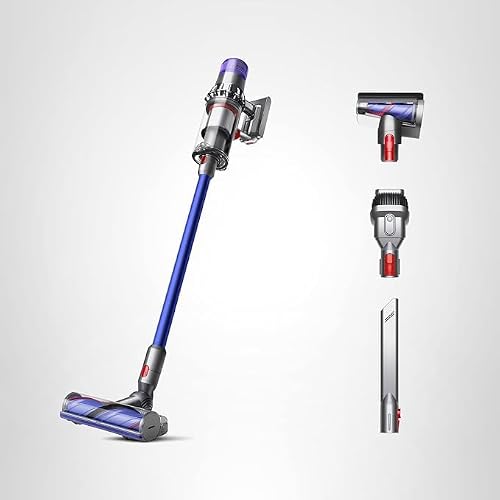
The Dyson wins on peak power. It delivers 185AW of suction across three modes, and its Motorbar cleaner head de-tangles wrapped long hair and pet hair as you clean.
The screen shows power modes, maintenance alerts and remaining runtime to the second. It also converts to a handheld with one click, so stairs, cars and upholstery are covered by the same machine.
The JELLYPIG X100 wins on endurance and features per dollar. Its 650W brushless motor reaches 60KPA, and its 8-cell battery pack runs up to 70 minutes on low mode.
It also stands on its own, which the Dyson does not. The touch screen tracks battery life, dust cup fullness and filter maintenance in one place.
Neither model includes a Miele-made cordless stick in this comparison. The Miele side of the question rests on its canister reputation, so if you want a cordless stick with that engineering pedigree, check what Miele currently offers before you decide.
Judged on the cordless sticks we can compare directly, the Dyson leads on head design and the JELLYPIG leads on runtime.
The two side by side
| Product | Best for | Runtime | Suction | Weight | Our score |
|---|---|---|---|---|---|
| JELLYPIG Cordless Vacuum Cleaner | long cleaning sessions | Up to 70 min | 60KPA | 6.3 lb | 9.7 |
| Dyson V11 Origin | deep carpet cleaning | Up to 60 min | 185 AW | 6.6 lb | 8.5 |
The table shows the numbers that decide most purchases. The Dyson's 185AW figure measures air watts at the cleaner head.
The JELLYPIG's 60KPA figure measures pressure in kilopascals. Those units are not directly comparable, so judge them by the cleaning job each one is built for.
Dyson pairs its suction with a whole-machine filtration system that traps 99.99% of particles as small as 0.3 microns. The JELLYPIG uses an 8-layer filtration system with a HEPA filter.
Both suit allergy-conscious homes, though only the Dyson states a particle-capture figure.
The JELLYPIG carries a 1.8-liter dust cup. The Dyson's bin is smaller at 0.2 gallons.
If you clean a big home in one pass, the larger bin means fewer trips to the trash.
Weight sits close: 6.6 pounds for the Dyson and 6.3 pounds for the JELLYPIG. The real split is in storage and controls.
The JELLYPIG stands on its own wherever you park it, while the Dyson leans on its docking station.
Suction and cleaning power
The Dyson has the higher peak suction, but the JELLYPIG is close enough that floor type matters more than the number. Dyson's 185AW in Boost mode is built for intensive spot cleaning.
The JELLYPIG's 60KPA is available across its three power levels.
Dyson's advantage shows up on carpet. Its Motorbar cleaner head digs into pile and uses hair removal vanes to clear the brush bar as you clean.
That head design is the real difference, not just the wattage. It means long hair and pet hair leave the brush bar instead of wrapping around it and dulling suction over time.
The JELLYPIG takes a different approach. Its V-shaped spiral brush and guide comb form a cutting and dredging system that rolls hair clumps into the dust cup.
That works well on hard floors and low-pile carpet. The design tackles both stubborn clumps deep in carpet and fine hairs in floor crevices.
Tools for stairs and upholstery
For high-pile carpet and pet beds, the Dyson's Hair screw tool adds a conical brush bar for upholstery and stairs. The JELLYPIG relies on its main brush and the included 2-in-1 brush.
That 2-in-1 brush pairs with a long crevice nozzle for reach along skirting boards and between cushions.
If your home is mostly hard floor with area rugs, the JELLYPIG's suction is more than enough. If you have wall-to-wall carpet and shedding pets, the Dyson's head design earns its keep.
The choice is less about the raw number and more about which brush meets your floor.
Runtime and battery life
The JELLYPIG runs longer on a charge, at up to 70 minutes on low mode against the Dyson's 60. Both figures assume favorable conditions, and both drop sharply at the highest setting.
Dyson's 60 minutes comes in Eco mode. Auto mode balances power and runtime for everyday cleaning.
Boost mode gives about five minutes of maximum suction for spot work.
The JELLYPIG's 70 minutes is measured with no load, at 25°C room temperature, on a new fully charged battery. Its 4-hour charge time is longer than many sticks in its class.
Dyson doesn't publish a charge time in the details we compared, so plan around the runtime you need rather than the recharge window.
Matching runtime to the size of your home
For a large home, the JELLYPIG's extra 10 minutes and 1.8-liter bin cut the number of interruptions. You spend less time walking back to the charger and more time cleaning rooms.
If you clean in short bursts and want maximum power when you do, the Dyson's mode system is the better fit. Auto mode protects the battery over time, and Boost is there for a single stubborn patch.
If you clean whole floors in one go, the JELLYPIG's endurance wins. Its 1.8-liter dust cup also means the bin fills less often than the Dyson's 0.2-gallon cup.
Filtration and air quality
Dyson publishes a specific capture figure; the JELLYPIG offers HEPA filtration without one. Dyson's advanced whole-machine filtration traps 99.99% of particles as small as 0.3 microns and expels cleaner air.
The JELLYPIG's 8-layer filtration system includes a HEPA filter. Its included components list an extra HEPA filter and sponge, so you can swap in a fresh filter when the first one clogs.
Both makers expect filter care. Dyson's screen shows maintenance alerts when the filter needs attention.
The JELLYPIG's touch screen shows filter maintenance status alongside battery life and dust cup fullness. The JELLYPIG's manual also notes that its telescopic tube and floor brush roller need cleaning every one to two weeks, not just the filter.
Clean either filter every one to two weeks and empty the dust cup after each use. A clogged filter drops suction on any cordless vacuum, and the JELLYPIG's manual calls out that dust and hair accumulation blocks air ducts.
If someone in your home has allergies, the Dyson's stated particle-capture figure gives you a number to compare. The JELLYPIG gives you HEPA filtration and a spare filter in the box.
The Dyson's figure is tested against particles as small as 0.3 microns in Boost mode, while its other modes still capture at least 99.97%. Either way, filtration only holds up if you keep the filter clean.
Weight, handling and storage
Both sticks weigh about the same, but they handle very differently. The Dyson V11 Origin weighs 6.6 pounds.
The JELLYPIG X100 weighs 6.3 pounds.
The JELLYPIG stands on its own. Set it down to answer the door or move furniture and it stays upright without a wall lean.
The Dyson needs its docking station or a lean against a wall.
Dyson converts to a handheld with one click for cars, stairs and upholstery. The JELLYPIG is a stick first, with a 2-in-1 brush and long crevice nozzle for reach.
Its telescopic tube adjusts for height, so different people in the house can set it to a comfortable length.
The Dyson's wand and Motorbar head make it feel balanced on carpet. The JELLYPIG's 48.8-inch length and 10-inch width suit open floor plans and under-furniture passes.
Its body also has two wheels at the base, which help it track straight on long runs across hard floor.
Storage matters in small homes. The Dyson ships with a docking station for wall mounting.
The JELLYPIG includes a wall mount plate and hardware bag, so both can hang out of the way.
If you move between rooms often and want to park the vacuum mid-task, the JELLYPIG's self-standing body is a real convenience. If you clean stairs and cars regularly, the Dyson's handheld conversion is handier.
Think about which of those moments happens more often in your week.
Smart features and controls
The Dyson's screen is more informative; the JELLYPIG's touch screen is more direct. Dyson's LCD shows power modes, maintenance alerts and remaining runtime to the second.
The JELLYPIG's LED touch screen adjusts suction and shows battery life, dust cup fullness and filter maintenance. Both approaches remove guesswork, though the Dyson gives more detail on runtime.
Seeing the countdown to the second helps you plan the last few rooms rather than guessing.
Dyson's three modes are Auto, Eco and Boost. Auto is the default for everyday cleaning and protects battery lifespan.
Boost is for intensive spot cleaning.
The JELLYPIG's three power levels are selected by touch. It also shows a low noise level of 58dB in its details, quieter than the Dyson's 70dB figure.
Quiet operation helps in apartments and homes with light sleepers. If you clean while a child naps or a partner works from home, that gap of roughly 12dB is noticeable.
If you like seeing exactly how much runtime remains, the Dyson's countdown is the better screen. If you want simple touch control and quieter running, the JELLYPIG fits better.
Neither screen replaces good cleaning habits, but both make the machine easier to live with.
Price tier and value
The Dyson sits in the premium tier; the JELLYPIG delivers more specs per dollar in the mid-range. Neither price is listed here, but the tier difference is clear from the feature set.
Dyson backs the V11 Origin with a 2-year limited warranty and lifetime Dyson support. Registering the machine on the MyDyson app adds personalized guides and maintenance support.
That support network is part of what the premium tier buys.
The JELLYPIG includes a 24-month protection plan, an extra HEPA filter and sponge, a telescopic tube and a wall mount plate in the box. That bundle covers the accessories most buyers add later.
A spare filter alone is worth having, since filters are the part that wears out first.
For buyers who want brand heritage and a mature support network, Dyson's premium tier is worth it. For buyers who want the longest runtime and the most accessories for less, the JELLYPIG is the value pick.
The JELLYPIG also lists a 1.8-liter dust cup and a rechargeable wall mount, both details that make everyday use easier.
Our Dyson vs Shark comparison shows how Dyson's premium pricing stacks up against another mid-range challenger. And if you want to stay within Dyson's lineup, our guide to the best Dyson vacuums covers cordless and corded options.
Who should buy which?
Buy the Dyson V11 Origin if carpet, pet hair and support matter most. Buy the JELLYPIG X100 if runtime, suction and value drive your decision.
Choose the Dyson V11 Origin if:
- You have wall-to-wall carpet or high-pile rugs and need a head that digs in.
- You want a de-tangling brush bar for long hair and pet hair.
- A stated filtration figure for fine particles matters to your household.
- You clean stairs, cars and upholstery and want handheld conversion.
- You value brand support and a 2-year limited warranty.
Choose the JELLYPIG X100 if:
- You clean a large home in one pass and need up to 70 minutes.
- You want the highest suction figure in this comparison at 60KPA.
- You like a vacuum that stands on its own between rooms.
- You want a spare HEPA filter and a wall mount in the box.
- You prefer quieter running at 58dB.
If neither fits, our Dyson vs LG cordless vacuum comparison adds a third cordless option with its own runtime and feature mix.
The verdict
For most readers, the Dyson V11 Origin is the cordless vacuum to buy. Its 185AW suction, de-tangling Motorbar head and whole-machine filtration make it the stronger cleaner for carpet and pet homes, and the LCD screen keeps you in control of runtime.
The handheld conversion and Hair screw tool extend it to stairs, upholstery and pet beds.
The Dyson vs Miele cordless vacuum question doesn't have a Miele-made cordless stick in this comparison, so the practical choice comes down to Dyson versus the best value challenger here. The JELLYPIG X100 wins that contest on runtime and suction per dollar.
It also stands on its own and ships with a spare filter.
Buy the Dyson if deep carpet cleaning and brand support top your list. Buy the JELLYPIG if you want the longest runtime, a self-standing body and a spare filter in the box.
Either way, match the stick to your floor type and cleaning session length before you order. The best cordless vacuum is the one whose battery, bin and brush match how you actually clean.
Frequently asked questions
Is Miele better than Dyson for cordless vacuums?
Miele is not a major name in cordless sticks, while Dyson's V11 Origin is one of the better-established options with 185AW suction and up to 60 minutes of runtime. Compare the exact model you are considering against the Dyson rather than judging by brand name alone.
How long does a Dyson V11 Origin run on a full charge?
Dyson says the V11 Origin runs up to 60 minutes, though actual runtime depends on the power mode, floor type and attachments used. Boost mode cuts runtime to about five minutes, so most cleaning happens in Auto or Eco mode.
What should I look for in a cordless vacuum instead of a Dyson?
Look for longer runtime, higher peak suction or a lower price tier. The JELLYPIG X100 offers up to 70 minutes and 60KPA of suction, plus a self-standing body.
That suits big homes better than a five-minute boost mode does.
Do cordless vacuums replace a full-size vacuum?
A cordless stick handles daily messes, pet hair and quick cleanups on hard floors and low-pile carpet well. For deep-pile carpet and whole-home cleaning, a corded vacuum still gives steadier suction, so most homes benefit from having both.
How often should I clean a cordless vacuum filter?
Clean the filter every one to two weeks for steady suction. Empty the dust cup after each use.
A clogged filter or full dust cup lowers suction on any cordless vacuum, Dyson included.


